News
- Get link
- X
- Other Apps
As US passes 150,000 coronavirus deaths, experts at Johns Hopkins call for reset in national response
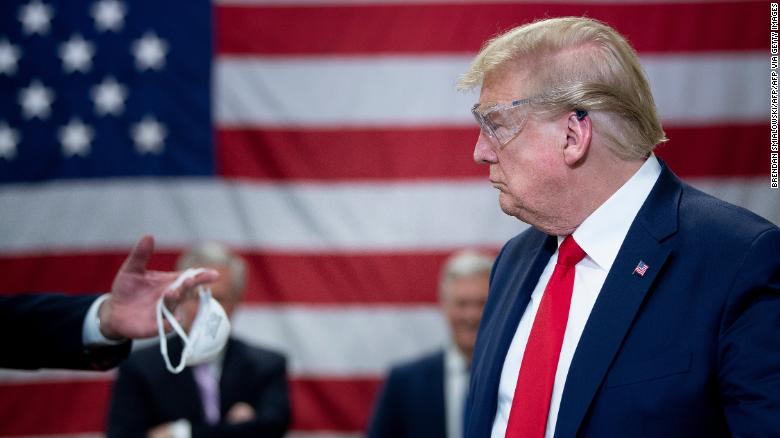


(CNN)The United States on Wednesday surpassed 150,000 recorded Covid-19 deaths -- a milestone that comes as the country's number of daily coronavirus deaths is the highest it's been since the spring.
The first death in the US was reported on February 29. The country reached 50,000 deaths 54 days later on April 23, and 34 days later, on May 27, crossed 100,000 deaths. It has taken 63 days to add another 50,000 to reach the 150,000 mark.
The country's coronavirus death toll was 150,676 as of Wednesday evening -- more than a fifth of the world's recorded deaths, according to Johns Hopkins University.
"I think the fact that we as a country have not been able to get our arms around this, have not prioritized preventing those deaths is all that much more maddening. And so, for me it's frustration, it's sadness. And a resolve to try to figure out how we prevent the next 150,000," Dr. Ashish Jha, director of the Harvard Global Health Institute, told CNN's Wolf Blitzer.
"I think we can, but we're really going to have to work for it," he added.
Some states are seeing their highest death tolls. California on Wednesday reported 197 Covid-related deaths in a single day, according to state Department of Public Health. That total far outpaces the previous high of 159, recorded just last week.
Florida reported a record 216 deaths.
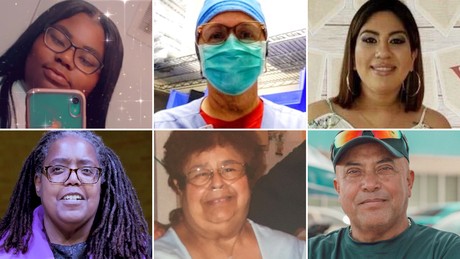
Nationwide, the seven-day moving average of daily deaths rose above 1,000 on Tuesday -- the first time since June 2.
And in 29 states, average number of daily deaths were at least 10% higher over the previous week, according to Johns Hopkins data.
Disease trends in the US are mixed: Deaths are increasing and hospitalizations are at or near peak levels, though new, daily reported infections are declining slightly.
But health experts have warned the death rate likely would rise as it is now, as a lagging consequence of a large spike in cases weeks earlier especially in the South and West.
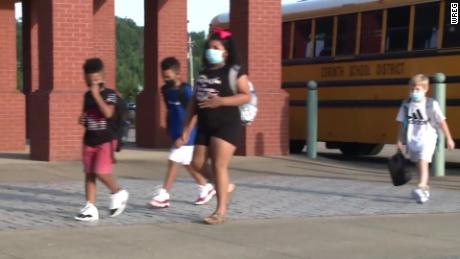
Infectious disease experts say the country is at a critical juncture, as debates about how and whether to reopen schools for in-person learning rumble on.
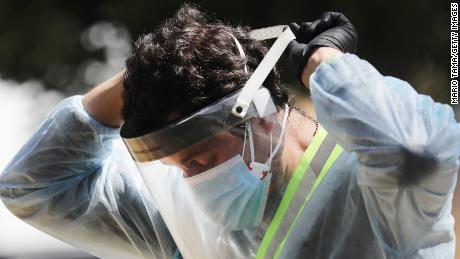
Case rates rose as businesses reopened and distancing rules relaxed in late spring, and those wanting more normalcy soon should get more disciplined now by wearing masks, limiting outdoor dining and social gatherings, and closing bars, Dr. Anthony Fauci said.
"It's not going to spontaneously come down," Fauci, director of the National Institute of Allergy and Infectious Diseases, said Tuesday in a call with several governors about the pandemic.
US should reset, Johns Hopkins experts say
The United States needs to restart its response with policy actions at the federal, state and local levels to get control of the pandemic, scholars at the Johns Hopkins University Center for Health Security said in a report.
"Unlike many countries in the world, the United States is not currently on course to get control of this epidemic," the report says. "It is time to reset."
The report includes 10 recommendations that include universal mask mandates, federal leadership to improve testing and, in places where rates of transmission are worsening, stay-at-home orders.
The report says federal, state and local leaders should mandate non-medical mask use in public and limit large indoor gatherings.
States should stop high risk activities and settings in areas that have rising test positivity, but no signs of crisis in hospitals or rising deaths. In areas where the situation is worse, stay-at-home orders should be reinstated, the report says.
The report points to improved testing being vital. The US response to the epidemic will be severely constrained without a reliable and efficient testing system, the report says.
One of the things the authors suggest to combat this is having the federal government work with states and commercial labs to identify and overcome obstacles to getting quick test results.
The report also gives recommendations about personal protective equipment, epidemiological data, funding research agendas, contact tracing, identifying best practices for improving public health response and developing policies and practices to protect group institutions.
Fauci told MSNBC he didn't believe moving back to a complete shutdown is necessary.
"I think psychologically that would be really very difficult for people to accept," he said. He advised that states and communities could "backtrack a little" in order to "regain your footing." Then the next reopening should be done with more caution, he said.
- Get link
- X
- Other Apps
Comments
Post a Comment